American Trucking Association
AssociationIndustry association dedicated to serving and representing the interests of the trucking industry with one united voice.

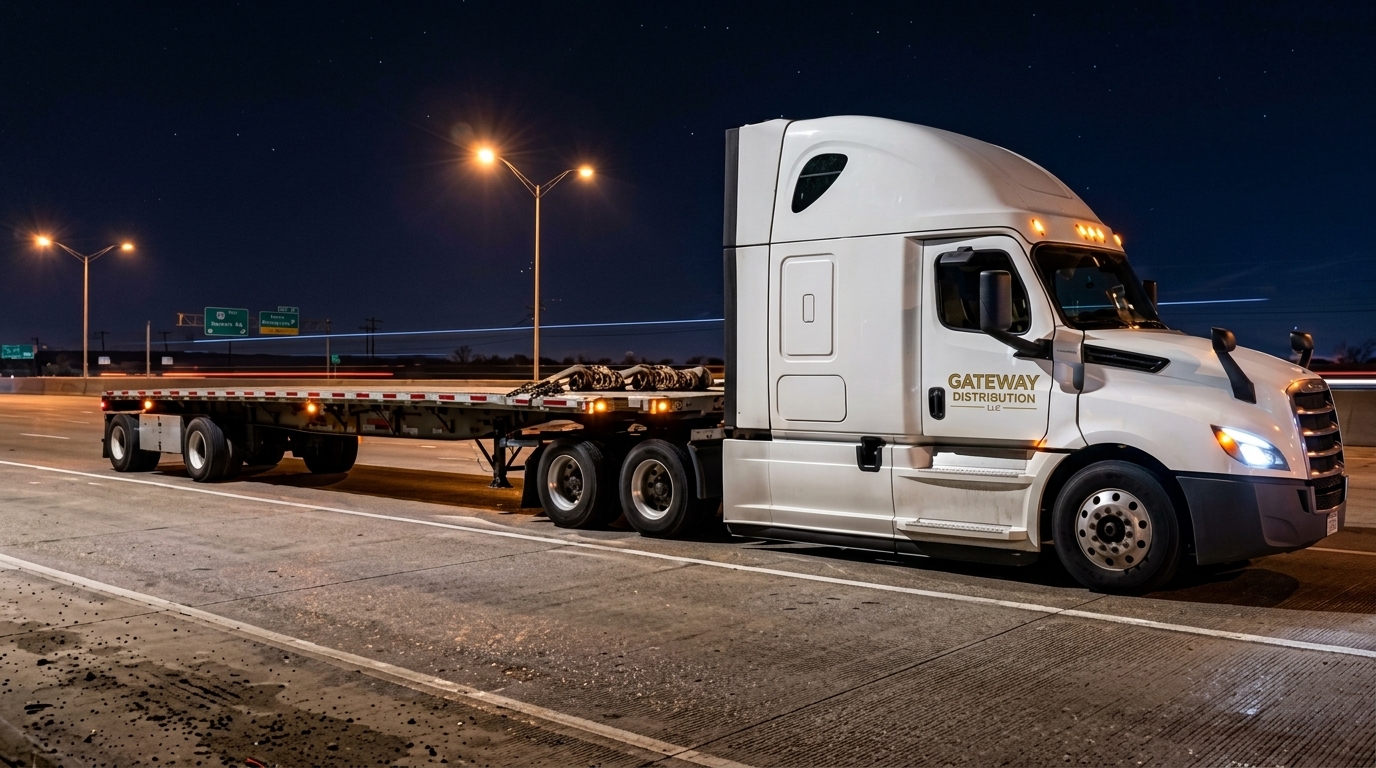
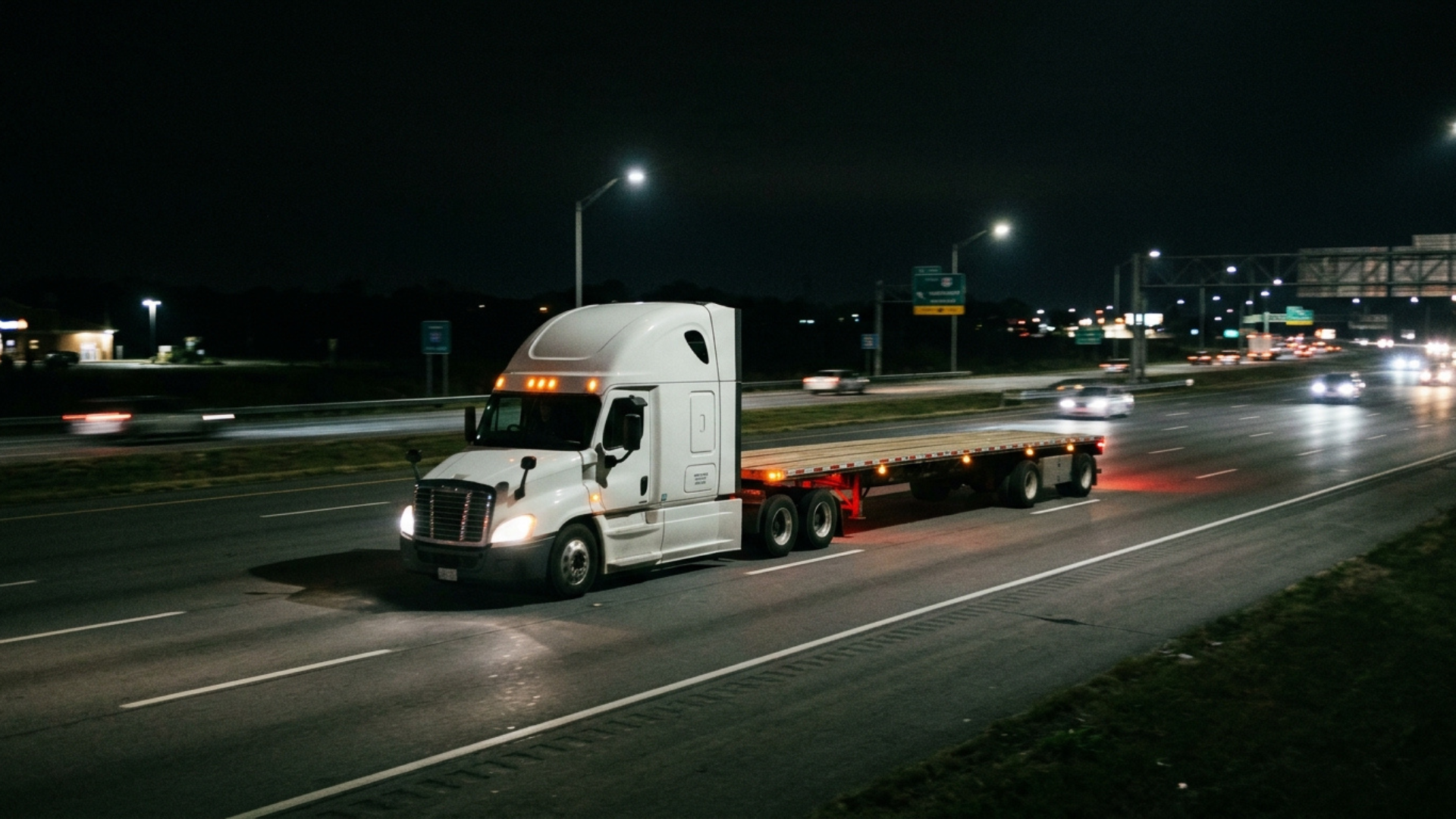
Long, heavy, and oversized freight needs the right deck and the right securement.
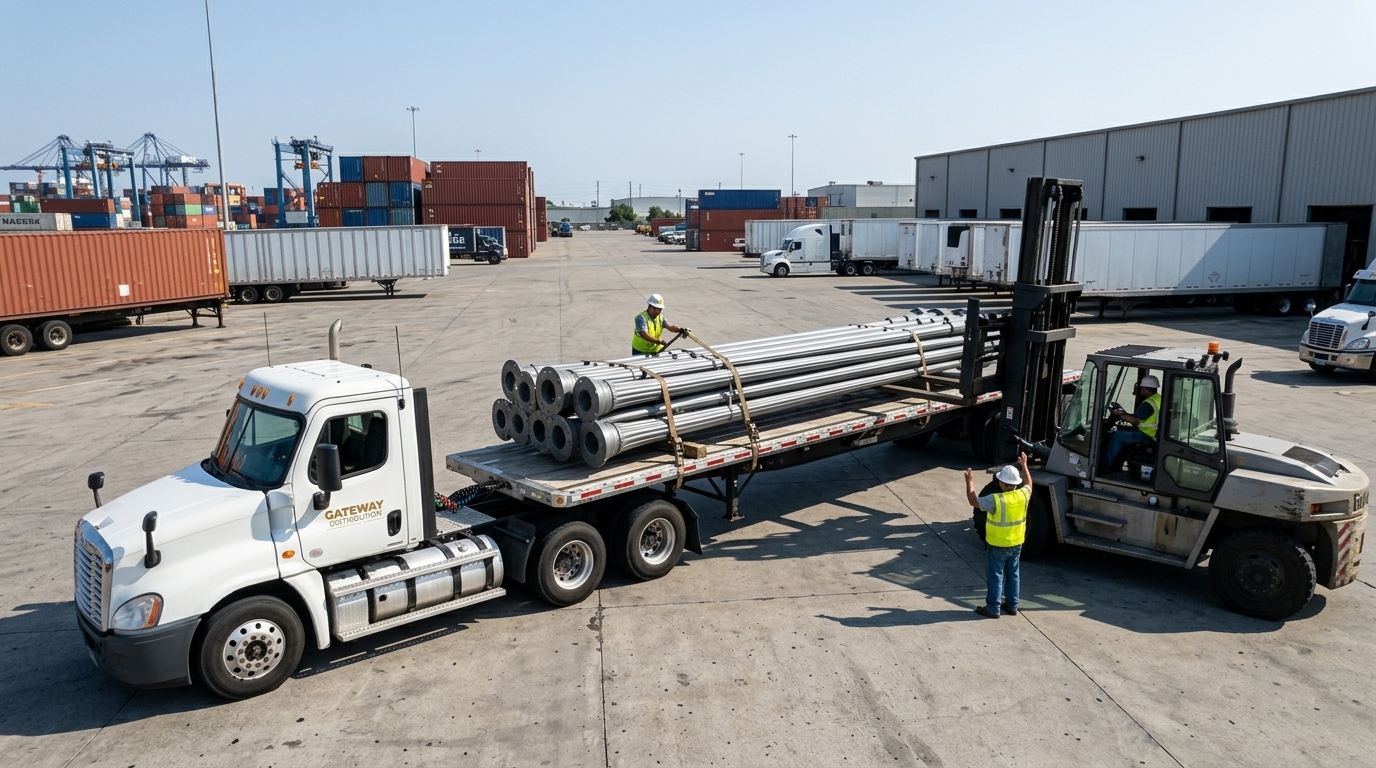
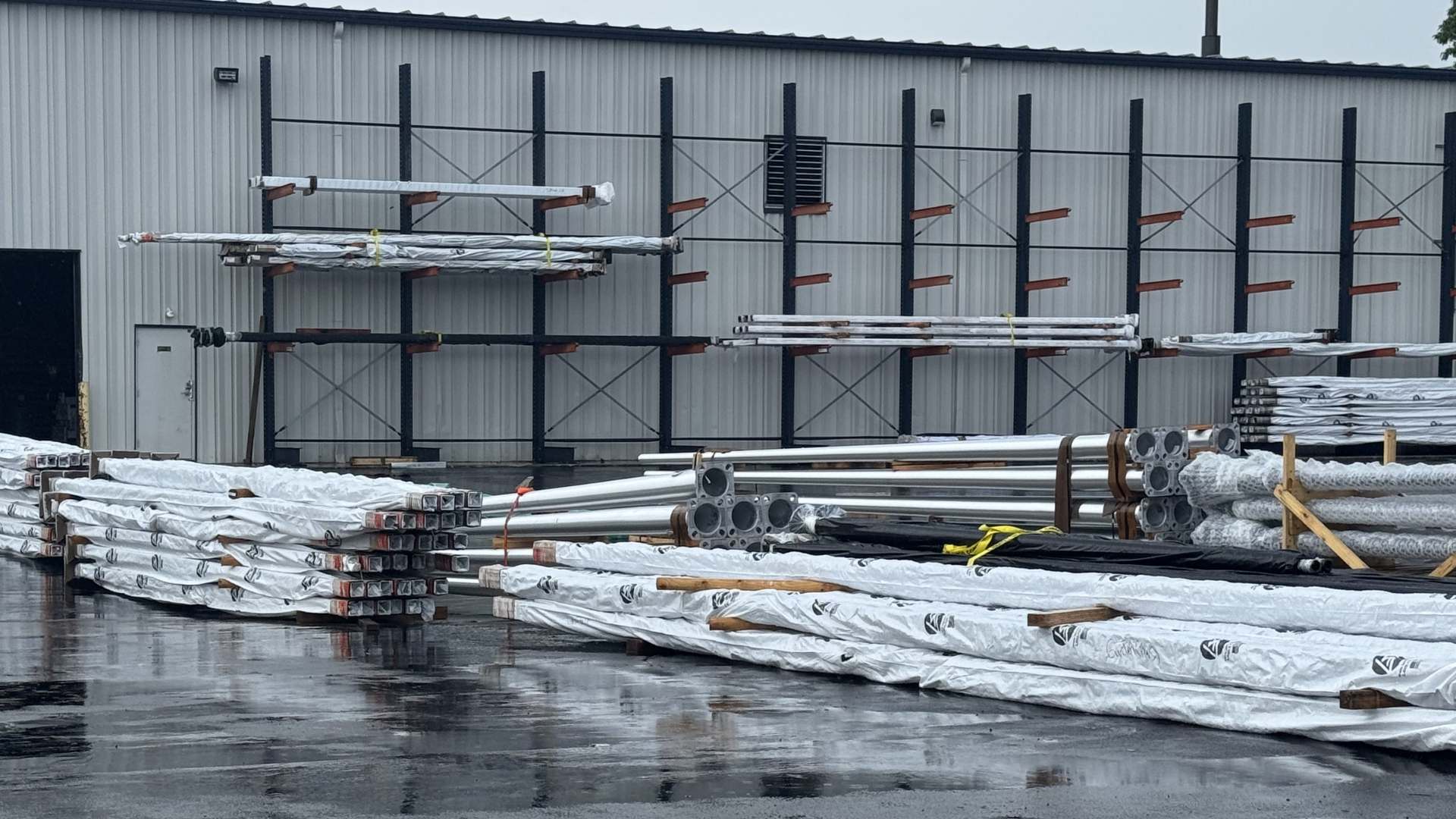
Flag poles, light poles, and oversized freight are part of the everyday work at Gateway Distribution. An open flatbed deck gives long and heavy items the room and the tie-down points they need, and our drivers know how to secure them for the road. Partial flatbed makes it practical to move a single run of poles without paying for a full truck.
Pair flatbed with our flag pole and light pole logistics for handling from pickup to the job site.
Flatbed shipping moves freight that an enclosed trailer cannot take or cannot load efficiently. Open decks carry steel, lumber, poles, pipe, structural materials, and machinery, and they load from the side, the top, or by crane instead of through a single dock door. When your freight is long, heavy, or awkwardly shaped, an open deck is usually the faster and safer way to move it.
Partial flatbed is the option many shippers miss. If your load takes up only part of a deck, you do not have to pay for a whole flatbed. Gateway Distribution places your freight on the deck space it needs and fills the rest of the deck with other compatible loads, so your cost reflects the size of your shipment instead of the size of the trailer. That makes it practical to move a single bundle of poles, one piece of equipment, or a few units of building material without waiting to batch up a full truck.
When your freight does fill a deck, full flatbed gives you the whole trailer moving directly from pickup to delivery. Either way, every load is blocked, braced, strapped, and tarped to its needs by drivers who handle open-deck freight regularly.
Flatbed is not the only service Gateway Distribution runs, but it is one we handle often, especially for the flag poles, light poles, and oversized freight that are central to our work. With a 75+ truck fleet and hubs in Cincinnati, New York, and Virginia, we keep open-deck freight moving across the lower 48.
Industry association dedicated to serving and representing the interests of the trucking industry with one united voice.
Membership organization that lets customers know the business is worthy of their trust.
The nation's fifth largest chamber providing economic development, government advocacy, and business growth support.
Commercial Vehicle Safety Alliance promotes commercial motor vehicle safety and security.
You have steel beams, long pipes, or structural materials that are too long for a regular enclosed trailer. Standard freight companies keep turning you down or quoting crazy prices.
Long steel and structural materials need flatbed trucks with proper tie-down points and load distribution. Look for carriers who specialize in steel hauling and have the right equipment to secure your specific beam lengths safely.
You only need part of a flatbed trailer for your machinery or steel. You're not sure if partial flatbed is actually cheaper than booking a whole truck.
Partial flatbed charges by linear feet, so you pay only for the space your freight uses. If your load takes up less than half the trailer, partial is usually cheaper. Get quotes for both to compare the actual numbers.
You have heavy equipment or machinery that needs to move next week. You're worried it's too late to find a flatbed truck with such short notice.
Flatbed capacity can be tight, especially for oversized loads. Call carriers now to check availability. Be flexible on pickup dates within your window. Having exact dimensions, weight, and loading requirements ready speeds up the booking process.
You have a crane or forklift to load your own equipment onto the flatbed. You're not sure if the trucking company expects you to handle loading or if their driver does it.
Most flatbed shipments are loaded by the shipper using their own equipment. The driver secures and tarps the load but doesn't usually handle the actual loading. Confirm this when you book so everyone knows who's responsible for what.
You're shipping equipment that could get damaged by weather. You're trying to decide if you need a covered flatbed or if tarps on an open deck are enough protection.
Tarps protect against rain and road debris but not extreme weather. If your equipment has sensitive electronics or can't get wet at all, covered flatbed is safer. For basic steel and machinery, properly secured tarps usually do the job at lower cost.
The specific situations we handle in each area. Tap one to see the full answers.